
When the monsoon season rolls in, most people breathe a sigh of relief. The scorching heat fades, the air feels cooler, and the rain brings a sense of calm. But while you’re enjoying the weather, your aircond might be silently struggling. Many homeowners assume that because the temperature drops during monsoon, their air conditioning system gets a break. In reality, the opposite is often true.
Monsoon weather introduces high humidity, constant moisture, unpredictable temperature changes, and an increased risk of mold and electrical issues. These conditions can put extra stress on your aircond system, both inside your home and in the outdoor unit. If left unchecked, small issues can snowball into costly repairs, poor cooling performance, unhealthy indoor air, and even complete system failure.
Think of your aircond like a car. You wouldn’t drive through flooded roads without checking the brakes and engine afterward, right? The monsoon does something similar to your aircond—it exposes it to conditions it doesn’t face during dry seasons. Moisture sneaks into places it shouldn’t, dust mixes with humidity to form stubborn grime, and drainage systems are tested to their limits.
This is why special care during monsoon isn’t just a suggestion—it’s a necessity. Proper maintenance during the rainy season helps ensure your aircond runs efficiently, keeps your indoor air clean, and lasts longer. Businesses like Rahima Aircond Services understand these seasonal challenges and provide targeted solutions to protect your comfort and investment. You can learn more about their services at rahimaaircondservices.com, especially if you’re looking for reliable monsoon aircond care.
So, does your aircond really need special attention during monsoon? Let’s break it down step by step and uncover what’s happening behind the scenes—and what you should be doing about it.
The monsoon season is more than just rain. It’s a complete shift in environmental conditions, and your aircond system feels every bit of it. To understand why special care is essential, you first need to understand what the monsoon climate does to your air conditioning unit.
Humidity is the real villain during monsoon. Even if the temperature outside isn’t extremely high, the moisture content in the air skyrockets. Your aircond doesn’t just cool the air—it also removes humidity. During monsoon, this dehumidification process works overtime.
When humidity levels are high, moisture tends to accumulate inside the aircond unit, especially on filters, evaporator coils, and drainage trays. Over time, this creates a damp environment that’s perfect for mold, bacteria, and fungi to grow. These microorganisms don’t just affect the machine; they directly impact the air you breathe.
Continuous moisture exposure can also lead to rust and corrosion, particularly in metal components. This is especially problematic for outdoor units, which are constantly exposed to rain and damp surroundings. Without proper care, corrosion can weaken components and shorten the overall lifespan of your aircond.
Monsoon weather is unpredictable. One moment it’s cool and rainy, the next it’s warm and sticky. These constant temperature fluctuations force your aircond to adjust frequently, which puts stress on internal components like the compressor and thermostat.
Frequent switching on and off may seem harmless, but over time it can lead to wear and tear. The system may struggle to maintain a stable indoor temperature, resulting in uneven cooling and increased energy consumption. This stress is often invisible until something breaks down.
Rain doesn’t eliminate dust—it just relocates it. During monsoon, dust particles mix with moisture and settle inside aircond units, forming sticky layers on filters and coils. This grime is much harder to clean than dry dust and can significantly reduce airflow.
At the same time, the damp environment becomes a breeding ground for microbes. Mold spores can spread through the aircond system and circulate throughout your home. This not only affects cooling efficiency but also poses serious health risks, especially for children, the elderly, and those with respiratory issues.
Understanding these impacts makes one thing clear: monsoon conditions are tough on aircond systems. Without special care, you’re asking your aircond to perform under pressure without support.
Most people think of airconds as cooling machines, but they’re also responsible for maintaining indoor air quality. During the monsoon season, this role becomes even more critical—and more challenging.
Moisture doesn’t always drip visibly from your aircond. Often, it hides deep inside the unit. Filters, coils, and air ducts can remain damp for long periods, especially if the aircond isn’t cleaned regularly during monsoon.
This hidden moisture is the perfect environment for mold growth. Once mold forms inside the aircond, it doesn’t stay there. Every time you switch on the unit, mold spores can be blown into your living space. The scary part? You might not even notice it at first.
Poor indoor air quality isn’t just uncomfortable—it’s dangerous. Mold, bacteria, and dust particles can trigger allergies, asthma, headaches, skin irritation, and even chronic respiratory conditions. During monsoon, when homes are often closed to keep rain out, polluted indoor air gets trapped inside.
If you or your family members experience sneezing, coughing, or unusual odors when the aircond is on, it could be a sign that your system needs immediate attention. These symptoms are often brushed off as “seasonal,” but in many cases, the aircond is the real culprit.
Taking care of your aircond during monsoon isn’t just about avoiding repairs—it’s about protecting your health. Clean filters, disinfected coils, and proper drainage ensure that the air circulating in your home is fresh and safe to breathe.
Professional servicing from experts like Rahima Aircond Services focuses not only on mechanical performance but also on hygiene. Their monsoon-specific maintenance helps eliminate harmful buildup and ensures your aircond contributes to a healthier indoor environment. That’s peace of mind you can actually feel with every breath.
Monsoon-related aircond issues often start small and grow quietly. By the time most homeowners notice something is wrong, the damage is already done. Knowing the most common problems can help you act early.
Water leakage is one of the most frequent complaints during the rainy season. High humidity causes excess condensation, and if the drainage system is clogged or damaged, water has nowhere to go. This leads to dripping water from the indoor unit, stained walls, and sometimes even ceiling damage.
Leakage isn’t just messy—it’s a warning sign. Ignoring it can lead to electrical hazards and structural damage in your home.
That musty smell when you turn on the aircond? That’s often mold or bacteria. During monsoon, odors become more common due to moisture buildup inside the unit. These smells aren’t just unpleasant; they’re a sign of poor hygiene inside your aircond system.
If your aircond feels weaker during monsoon, you’re not imagining things. Dirty coils, clogged filters, and excessive humidity make it harder for the system to cool effectively. As a result, the aircond runs longer, consumes more electricity, and still fails to deliver comfort.
Moisture and electricity don’t mix. During monsoon, electrical components are at higher risk of short circuits, especially if wiring insulation is compromised or if water enters the system. These issues can cause sudden shutdowns or permanent damage if not addressed quickly.
The short answer is yes—absolutely. Monsoon conditions create challenges that regular maintenance routines often don’t cover.
Regular aircond servicing is designed for general wear and tear. Monsoon care, on the other hand, focuses on moisture control, mold prevention, drainage efficiency, and electrical safety. Without these extra precautions, your aircond is vulnerable to damage that can reduce performance and lifespan.
Monsoon-specific care includes deeper cleaning, anti-fungal treatments, thorough drainage inspection, and moisture protection for electrical components. It’s like switching from casual exercise to targeted therapy—both are important, but one is designed for a specific challenge.
This is where professional services like Rahima Aircond Services stand out. Their technicians understand how monsoon conditions affect airconds locally and tailor their servicing accordingly. Visiting rahimaaircondservices.com can give you a clear idea of the solutions available to keep your system running smoothly during the rainy season.
If monsoon had a mascot that troubled air conditioners the most, humidity would be it. Humidity is sneaky. You can’t see it, you can’t touch it, but it quietly works its way into every corner of your aircond system, creating problems that often go unnoticed until they become serious.
Your aircond is designed to handle moisture to a certain extent because cooling naturally produces condensation. But during monsoon, the moisture levels in the air are much higher than usual. This means your aircond is constantly pulling in damp air, extracting moisture, and dealing with excess water inside the unit.
Over time, this moisture settles on evaporator coils, blower fans, filters, and even inside air ducts. When these components remain wet for extended periods, they start losing efficiency. Airflow gets restricted, cooling becomes uneven, and the system has to work harder just to maintain the set temperature.
Metal parts and moisture are a terrible combination. Continuous exposure to humidity can lead to rust and corrosion, especially on coils, screws, and connectors. Corrosion weakens components, reduces heat transfer efficiency, and increases the likelihood of breakdowns.
What makes this dangerous is that corrosion often happens slowly. By the time you notice a problem, the damage is already advanced. Regular monsoon servicing helps identify early signs of corrosion and prevents costly replacements down the line.
Think of humidity like slow poison for your aircond. It may not cause immediate failure, but over months and years, it eats away at the system. An aircond that could easily last 10–12 years might struggle to reach half that lifespan if humidity-related issues are ignored.
Special care during monsoon isn’t about overdoing maintenance—it’s about countering humidity before it silently destroys your investment.
Many homeowners wait until their aircond stops working before calling a technician. During monsoon, that approach can be both inconvenient and expensive.
Preventive maintenance is like an umbrella—you use it before you’re drenched. Regular servicing during monsoon helps detect minor issues such as partial drain blockages, early mold formation, or loose electrical connections. Fixing these early costs far less than emergency repairs.
Emergency repairs during the rainy season often come with added complications. Spare parts may be delayed, scheduling technicians becomes harder, and the risk of further damage increases if moisture continues to spread.
Many people skip servicing to save money, but the reality is the opposite. A poorly maintained aircond consumes more electricity, struggles to cool, and breaks down more frequently. Regular servicing keeps energy consumption in check and avoids major repair bills.
A simple cleaning or adjustment now can save you thousands later. That’s not an expense—it’s smart budgeting.
Monsoon servicing isn’t just about cleaning filters. It requires trained eyes to spot moisture damage, proper tools to clean deep components, and safe handling of electrical parts in damp conditions. Professionals like Rahima Aircond Services are equipped to handle these challenges safely and effectively.
Their expertise ensures your aircond doesn’t just survive the monsoon—it performs at its best throughout it.
Filters and coils are the lungs and heart of your aircond system. During monsoon, they need more care than ever.
Aircond filters are designed to trap dust, pollen, and particles. Add moisture to the mix, and you’ve got the perfect breeding ground for bacteria and mold. A damp filter doesn’t just block airflow—it circulates contaminated air throughout your home.
Dirty filters force your aircond to work harder, reducing efficiency and increasing electricity consumption. Worse, they compromise indoor air quality.
Evaporator and condenser coils play a key role in heat exchange. When coils are covered with sticky grime caused by dust and moisture, heat transfer becomes inefficient. The aircond runs longer cycles, consumes more power, and still fails to cool properly.
Clean coils can improve efficiency by up to 20–30%, which makes a noticeable difference in both comfort and electricity bills.
During the rainy season, filters should ideally be checked every two to three weeks. Professional deep cleaning of coils is recommended at least once during the monsoon, depending on usage and environment.
This is where expert services from rahimaaircondservices.com make life easier. Scheduled maintenance ensures no component is overlooked.
If there’s one component that causes maximum trouble during monsoon, it’s the drainage system.
Excess condensation during monsoon puts heavy pressure on drain pipes. Dust, algae, and debris can easily clog the drain line, causing water to back up and leak from the indoor unit.
Many homeowners mistake this for a serious mechanical issue, but in most cases, it’s a drainage problem that needs immediate attention.
Water dripping from the indoor unit
Damp walls or ceilings near the aircond
Musty smell when the unit is running
Gurgling sounds from the aircond
Ignoring these signs can lead to structural damage and electrical hazards.
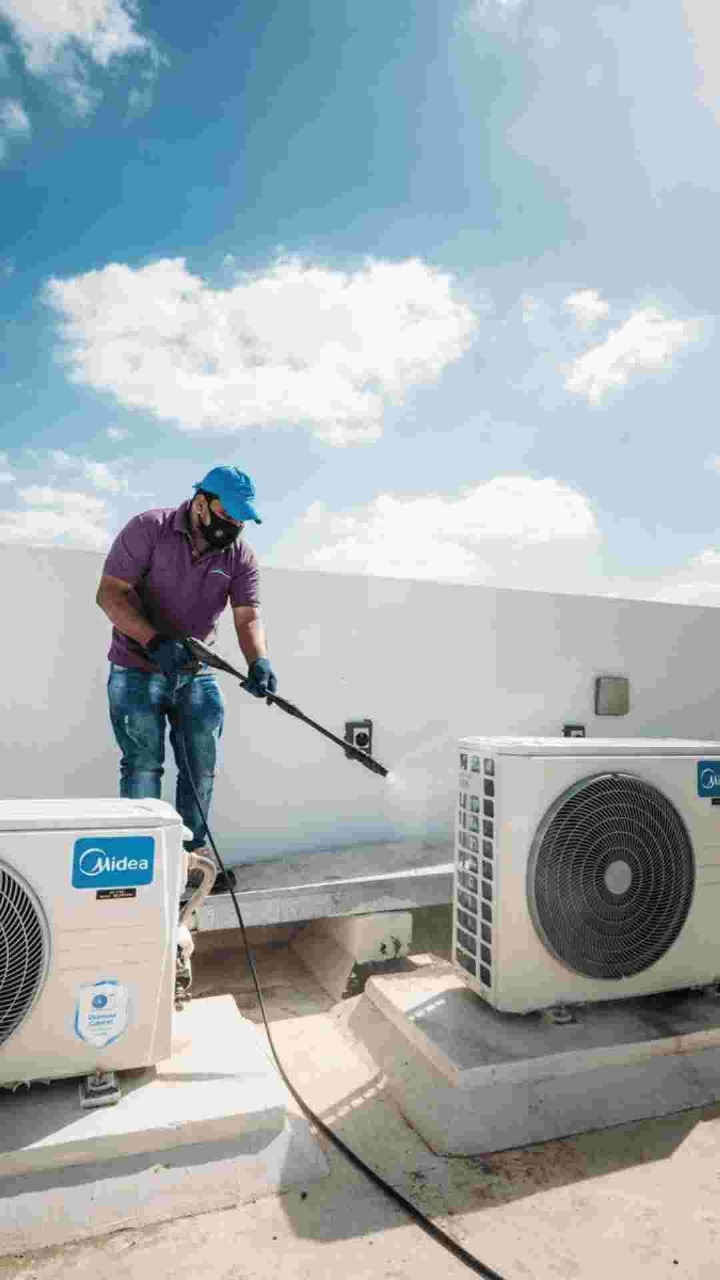
Professionals use high-pressure cleaning, vacuum pumps, and anti-fungal treatments to clear and protect drain lines. DIY methods often provide temporary relief but don’t solve the root problem.
Monsoon increases the risk of electrical issues, making safety a top priority.
Moisture can seep into wiring, terminals, and control boards, increasing the risk of short circuits. Even a small amount of water can cause significant damage.
Sudden shutdowns
Tripping circuit breakers
Non-responsive remote controls
Burning smell from the unit
These issues should never be ignored.
Avoid switching the unit on and off repeatedly
Ensure proper earthing
Schedule professional inspections during monsoon
Never attempt DIY electrical repairs in wet conditions
Ever wondered why your electricity bill doesn’t drop during monsoon, even though it’s cooler outside?
Removing humidity requires energy. Your aircond may run longer cycles to achieve comfort, even if the temperature isn’t very high.
Dirty filters, clogged coils, and inefficient drainage all force the system to consume more power. The result? Higher bills and lower comfort.
Set temperature between 24–26°C
Use dry or dehumidifier mode if available
Keep doors and windows closed
Service the unit regularly
Knowing what you can and cannot do yourself is crucial.
Clean external filters
Wipe the indoor unit casing
Check for visible leaks
Ensure proper airflow
Electrical inspections
Coil cleaning
Drain line flushing
Gas pressure checks
DIY repairs during monsoon can lead to injuries, electrical damage, and voided warranties. When in doubt, always call a professional.
Choosing the right service provider makes all the difference.
Rahima Aircond Services understands how monsoon conditions affect airconds locally. Their team knows exactly what to look for and how to fix it efficiently.
From preventive maintenance to emergency repairs, their services are designed to keep your aircond running smoothly without unnecessary costs.
With a strong local presence and customer-focused approach, Rahima Aircond Services has become a trusted name for monsoon aircond care. Visit rahimaaircondservices.com to explore their full range of services.
Some warning signs should never be ignored.
Persistent water leakage
Foul or musty odors
Weak airflow
Unusual noises
Sudden increase in electricity bills
If you notice any electrical smell, frequent shutdowns, or water near power connections, turn off the unit and call a professional immediately.
A simple checklist can prevent major problems.
| Task | Frequency |
|---|---|
| Filter cleaning | Every 2–3 weeks |
| Visual leak check | Weekly |
| Professional servicing | Once during monsoon |
| Outdoor unit inspection | Monthly |
Consistency is key. Small, regular checks go a long way in keeping your aircond healthy.
So, does your aircond need special care during monsoon? Without a doubt, yes. The rainy season brings humidity, moisture, and environmental challenges that can quietly damage your aircond if ignored. From mold growth and water leakage to electrical risks and higher energy bills, the risks are real—but they’re also preventable.
With regular maintenance, smart usage habits, and professional support from trusted providers like Rahima Aircond Services, you can enjoy cool, clean air throughout the monsoon without worry. Think of monsoon care as insurance for your comfort, health, and long-term savings. A little attention now can save you a lot of trouble later.
Yes. Many monsoon-related issues develop silently. Servicing helps prevent hidden problems before they become serious.
The smell is usually caused by mold or bacteria growth due to excess moisture inside the unit.
Ideally every two to three weeks, depending on usage and indoor conditions.
Outdoor units are weather-resistant, but continuous exposure to moisture without maintenance can cause corrosion and electrical issues.
You can rely on Rahima Aircond Services for professional, monsoon-specific aircond care. Visit rahimaaircondservices.com for more details.
Please don’t forget to leave a review.
Trusted by homes and businesses across Johor. Real customers, real results—fast cooling, honest pricing, and reliable local service every time.